
How to Plan a European Campervan Itinerary
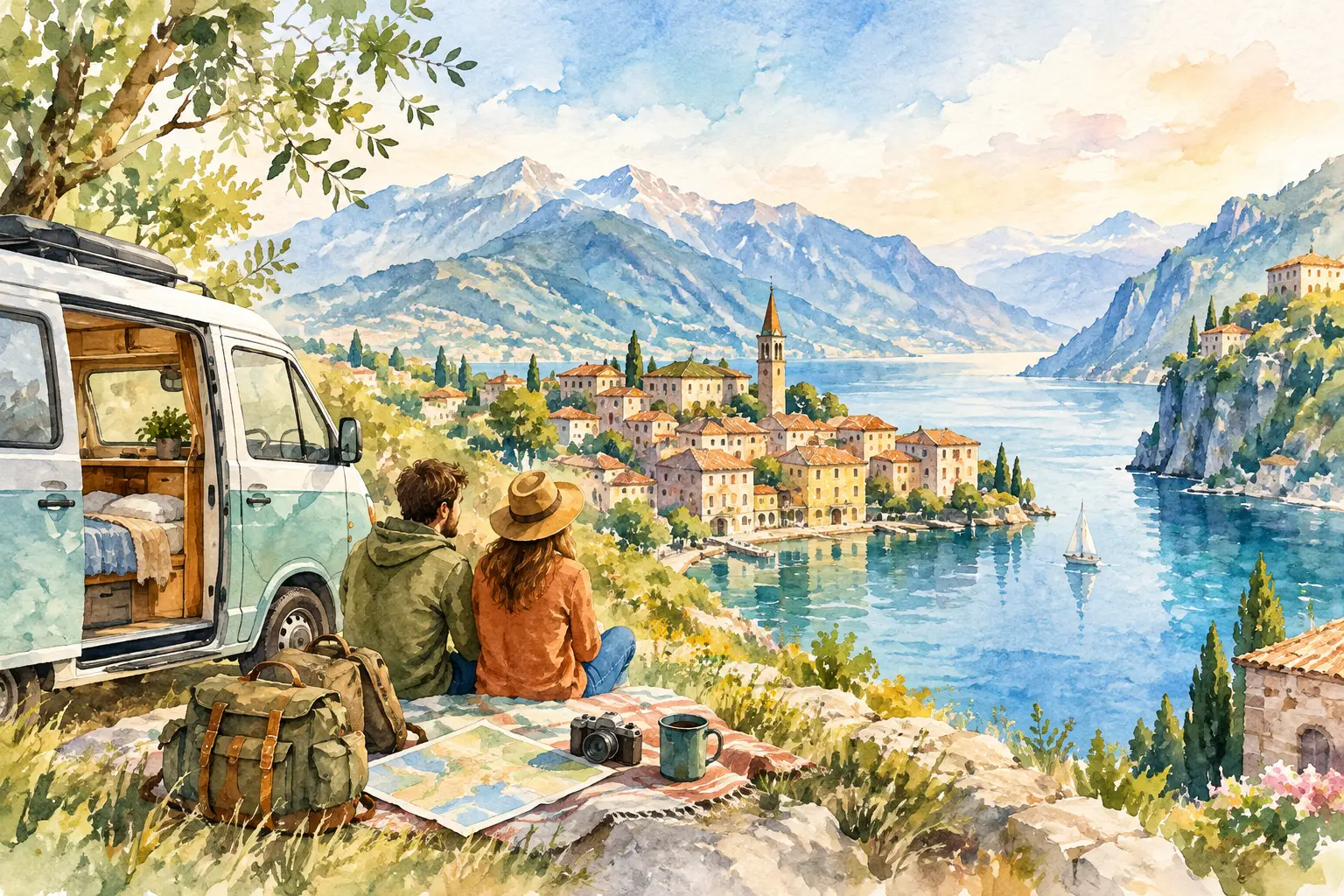
A great European road trip rarely begins with a long list of places to tick off. It begins with a simple question: where would you like to wake up? Beside an Alpine lake, under olive trees, within walking distance of a medieval old town, or by the Adriatic with the swimming things already packed? When you plan a European campervan itinerary, that freedom is the point – but a little thoughtful planning makes it feel wonderfully easy rather than rushed.
Starting in Bratislava or nearby Vienna puts some of Europe’s most rewarding motorhome country within comfortable reach. Austria, Slovenia, Hungary, northern Italy and Croatia can all form part of one brilliant journey. The secret is not trying to see all of them in one week.
Start your European campervan itinerary with time, not pins
Open a map and it is tempting to join every beautiful-looking place with a line. In a campervan, those lines take longer than they appear. Mountain roads, fuel stops, supermarket shops, toll booths, scenic detours and the simple pleasure of setting up for the evening all deserve time.
For most holidays, allow two to three hours of driving on a travel day. Four hours can work when moving between regions, especially on good motorways, but it should not be your default. A motorhome holiday is much more enjoyable when you arrive early enough to choose a pitch, make a coffee, go for a walk and actually enjoy where you have parked.
A useful rhythm is two nights in each main stop, with an occasional one-night break to divide a longer drive. Families often benefit from three nights near a lake, beach or activity-rich campsite. Couples may prefer a little more movement, but even then, leaving space for an unplanned vineyard, mountain lift or market day is part of the adventure.
Choose one direction and a realistic route shape
A circular route makes collection and return straightforward. From Bratislava, a very satisfying 10 to 14-day loop can travel through Austria and Slovenia, follow the Croatian coast, then return through Hungary. Another excellent option heads west through Austria to the Dolomites and northern Italy before looping back through Slovenia.
The right route depends on the season as much as your wish list. The Dolomites are spectacular from late spring to early autumn, but high passes can be closed or unpredictable outside that period. Croatia is glorious in summer, although coastal roads, campsites and historic towns are busy in July and August. In spring and autumn, inland Istria, Slovenia and Austrian lake regions often offer a calmer pace and cooler walking weather.
Try to avoid a route that forces you to retrace the same motorway for days. A loop feels like a journey, not a transfer. At the same time, do not choose a wildly ambitious circle simply for variety. One exceptional region explored properly is more memorable than five countries seen through the windscreen.
A 7-day example: Austria and Slovenia
For a shorter first motorhome holiday, keep the borders few and the driving relaxed. Spend a first night around Vienna or the Neusiedler See, continue towards Graz or southern Austria, then cross into Slovenia for Lake Bled, Bohinj and the Soča Valley. Return via Ljubljana and eastern Slovenia, allowing a final easy night before heading back to Bratislava.
This route blends cities, lakes, mountain scenery and excellent campsites without asking too much of your driving days. It is especially good for first-time campervan travellers, as distances remain manageable while every stop feels distinct.
A 14-day example: Slovenia, Istria and Croatia
With two weeks, travel from Bratislava through Austria into Slovenia, staying around Ljubljana and Lake Bohinj before heading south to the Slovenian coast or Istria. From there, choose two or three Croatian bases rather than changing campsite every night. Krk, Cres, the Plitvice area and the Dalmatian coast each offer a very different experience, but there is no need to force them all into one itinerary.
For the return, Hungary provides a gentle change of scene. Thermal baths, countryside campsites and a night around Lake Balaton can be a welcome contrast after the coast. This is also a sensible route for travellers who prefer a mixture of beaches, local food, walks and historic towns.
Plan driving days around the vehicle you are hiring
Modern campervans are designed for comfort, but they are larger and taller than a car. Before setting out, check the vehicle height, width and weight, then add these details to your sat-nav settings if available. This matters most in old town centres, car parks, low bridges and mountain roads.
An automatic motorhome takes much of the strain out of longer days, particularly in traffic and on unfamiliar routes. Still, do not treat a premium vehicle as a reason to cover huge distances. Its real advantage is that you can travel in comfort, cook when you fancy, sleep well and carry what you need without repeatedly packing and unpacking a hotel room.
At Flying Dog, a detailed handover helps you leave Bratislava confident with the practical essentials, from onboard equipment to safe vehicle operation. Use that moment well. Ask about water filling, waste disposal, heating, gas, levelling and the best way to use the navigation for your planned route. A five-minute question at collection can save an unnecessary detour later.
Campsites, overnight stops and the rules that change by country
Do not assume you can park anywhere beautiful and stay the night. Rules on wild camping, overnight parking and cooking outside vary across Europe and can change locally. In Austria, Slovenia, Italy and Croatia, official campsites and designated motorhome areas are generally the simplest, most dependable choice.
Book ahead for peak summer dates, school holidays and popular coastal areas. For flexible shoulder-season travel, you can often decide a day or two ahead, but always have a second option in mind. Small sites may have limited late arrivals, while larger campsites can feel more convenient for families who want facilities, swimming pools or a restaurant nearby.
When comparing campsites, look beyond the photographs. Consider whether it is practical for your vehicle, how far it is from the old town or beach, whether electricity is included, and how easy it will be to empty waste water and refill fresh water. A cheaper pitch far from everything can become poor value if it creates extra driving each day.
Budget for the road, not just the rental
A transparent holiday budget includes more than the campervan. Set aside money for motorway tolls, vignettes, tunnels, campsites, fuel, parking and the occasional city bus or ferry. Some countries use electronic vignettes, while others have toll gates. Mountain routes can involve separate charges, and Italian historic centres may have restricted traffic zones that are best avoided in a larger vehicle.
Food is one of the pleasures of motorhome travel, not a hidden cost. Shop locally, keep a few easy meals onboard for late arrivals, then make room for the places worth lingering over: a Slovenian farm restaurant, an Austrian bakery, a Croatian konoba by the harbour or gelato after an Italian evening stroll.
It also pays to keep one unscheduled day in your budget and itinerary. A rainy day may call for a spa. A sunny one may persuade you to stay beside the lake for another night. Flexibility is valuable when it is planned for.
Build in comfort for every traveller
If you are travelling with children, choose campsites with room to play and avoid moving every morning. If you are travelling as a couple, favour a few scenic bases with a walkable town or restaurant nearby, so neither of you has to drive after a relaxed dinner. For dog-friendly holidays, check campsite rules and summer heat before committing to long coastal days.
Pack for changing conditions rather than packing heavily. Even a hot Croatian forecast can mean a cool Alpine evening. Lightweight waterproofs, proper walking shoes, swimwear, a warm layer and a small torch earn their space far more often than extra outfits. Keep passports, driving documents, insurance information and any campsite confirmations together where both drivers can find them.
The best route is not the one that looks most impressive on a map. It is the one with enough room for the unexpected view, the long lunch and the quiet morning when nobody wants to leave just yet.
