
Motorhome Weight Limits: What You Can Carry
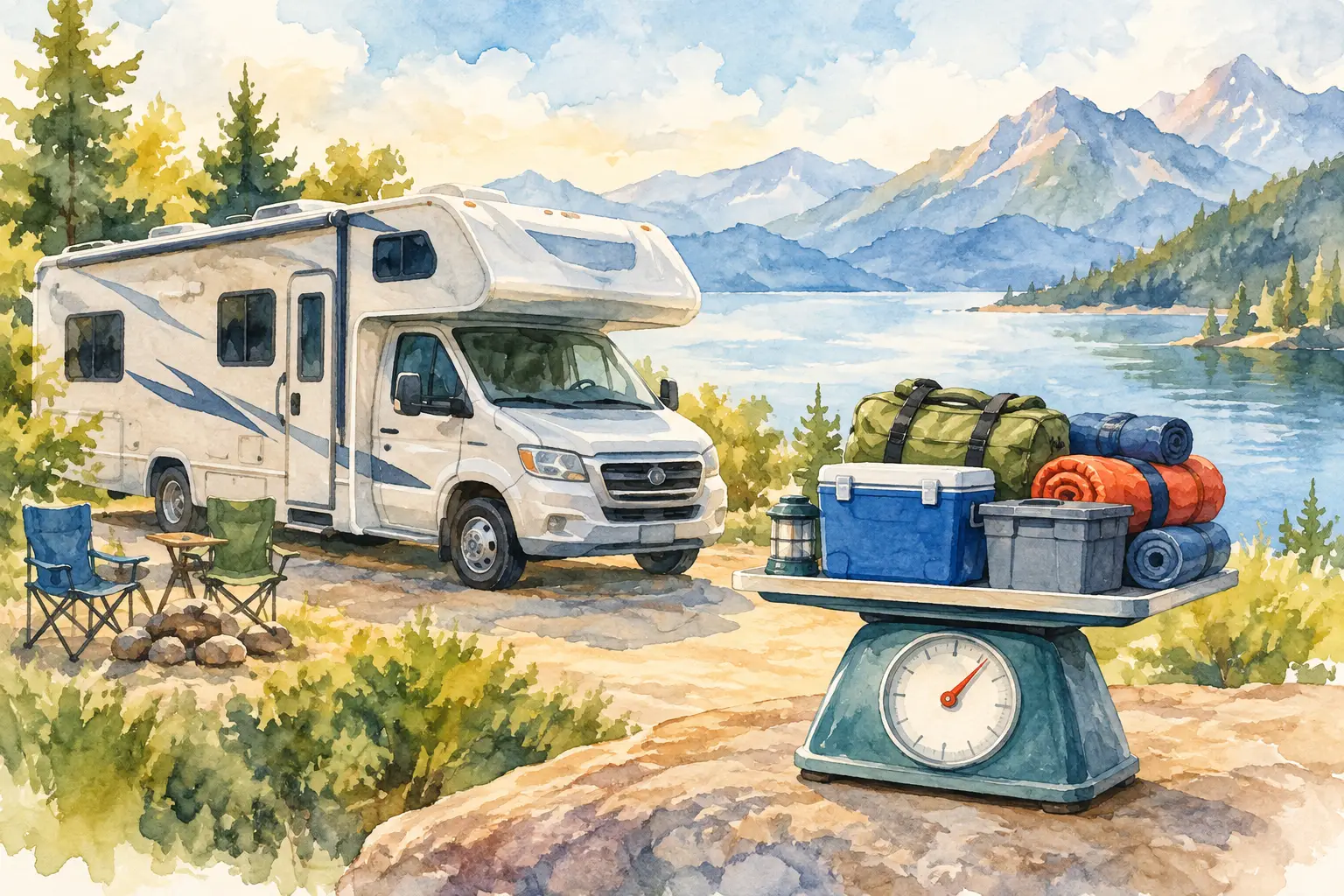
A motorhome can feel wonderfully generous on collection day: proper beds, a stocked kitchen, outdoor chairs, bikes and space for everyone’s favourite holiday essentials. Yet motorhome weight limits decide how much of that comfort can travel with you legally and safely. This is not a technical detail to leave until the last minute. It affects handling on Alpine roads, braking in summer traffic, insurance, roadside checks and, above all, how relaxed your journey feels.
The good news, dear adventurer, is that managing weight is straightforward once you know which figures matter. You do not need to travel with half a wardrobe or give up the coffee machine. You simply need to pack with a plan and understand what your motorhome can carry.
What motorhome weight limits actually mean
Every motorhome has a maximum authorised mass, often shown as MAM, MTPLM or GVW. These terms may vary by manufacturer or registration document, but they describe the same core idea: the greatest legal weight of the vehicle when it is ready to drive, including people, fuel, water, luggage and fitted equipment.
Many European motorhomes are plated at 3,500 kg. This is a popular limit because holders of a standard category B car licence can usually drive a vehicle up to this weight, subject to the licence rules in their country. It can also make tolls, ferries and access rules simpler. But 3,500 kg is the fully loaded ceiling, not the amount available for your belongings.
The difference between the vehicle’s running weight and its maximum authorised mass is its payload. If a motorhome has a 3,500 kg limit and a realistic ready-to-drive weight of 3,050 kg, it has 450 kg left for passengers, personal luggage, food, water beyond the stated allowance, sports equipment and any extras.
That 450 kg can disappear faster than people expect. Four adults might account for 280 kg before a single suitcase is loaded. Add bikes, a full fresh-water tank, supplies for a week in Croatia and a pet, and the margin becomes very small.
The running weight is not an empty vehicle
A motorhome’s stated running weight normally includes the driver, a partly filled fuel tank and basic fluids, along with factory-fitted standard equipment. It may include a limited water allowance, but this varies. Optional equipment can also change the figure. An awning, extra battery, solar panel, automatic gearbox, larger fridge or bike rack all add weight.
For this reason, treat brochure figures as a helpful starting point rather than a packing guarantee. The vehicle’s weight plate and supplied documentation are the figures to follow. When collecting a hired motorhome, ask the team to show you the relevant weights and clarify the allowance for your group. A good handover turns uncertainty into a simple holiday checklist.
Why weight matters beyond a roadside fine
Overloading is not just about exceeding a number on a plate. A heavily loaded motorhome takes longer to stop, can feel less stable in crosswinds and may put extra strain on tyres, suspension and brakes. On a twisting descent towards Lake Garda or through the Dolomites, that extra weight is very real.
It also matters where the weight sits. A motorhome can be under its overall maximum yet overload an individual axle. Rear garages are brilliant for camping furniture and outdoor gear, but loading every dense item at the very back can overload the rear axle and make steering feel lighter. Similarly, a long rear overhang magnifies the effect of weight placed furthest from the axle.
Across Europe, enforcement practices differ, but authorities can use weighbridges during roadside checks. If a vehicle is over its permitted weight, the driver may face a fine and be required to unload before continuing. Depending on the circumstances and policy terms, an overloaded vehicle could create unwelcome complications after an accident. It is far better to weigh once, make a few sensible adjustments and drive on with confidence.
Do not forget towing and nose weight
If you plan to tow a trailer, check both the motorhome’s towing limit and the permitted combined weight. The trailer’s nose weight also counts against the motorhome’s payload and rear axle allowance. This is one of those situations where the figures deserve a proper conversation before departure, particularly if you are carrying motorcycles or a substantial amount of equipment.
A practical way to pack for a European road trip
Start with people. Weigh each passenger honestly, then allow for their clothes and personal kit. This is not about judgement – it is simply the fairest way to understand the available payload. Next, consider the items that quietly add up: full water tanks, bicycles, folding chairs, barbecues, paddleboards, bulky dog equipment and food shopping.
Water is often the easiest place to save weight. One litre weighs one kilogram, so a 100-litre fresh-water tank can add 100 kg. For a long drive between campsites, travelling with enough water for toilet use, washing hands and a drink is sensible, but a completely full tank is not always necessary. If you are heading to a campsite with reliable facilities, filling up after arrival can preserve useful payload and improve driving manners.
Pack heavy things low down and close to the axles. Tinned food, drinks and tool kits belong in low lockers, secured so they cannot move. Keep upper cupboards for light clothing, bedding and soft items. Do not use the rear garage as a place to throw in everything that did not fit elsewhere. It is valuable storage, but it needs balance.
For a family, shared packing makes a big difference. Instead of four large suitcases, try soft bags that fit more easily into lockers, with a small amount of versatile clothing that can be layered for changing weather. Most Flying Dog motorhomes come comprehensively equipped, so you should not need to bring duplicate kitchenware, cleaning supplies or camping basics unless you have a particular preference.
How to check your motorhome’s weight properly
The only dependable answer is a weighbridge. Many public weighbridges, recycling centres, agricultural suppliers and commercial vehicle facilities offer weighing services, though opening arrangements vary. Look for one near your collection point or on the first part of your route.
Arrive exactly as you intend to travel: everyone aboard, luggage stowed, food loaded, bikes fitted and tanks at their planned level. Ask for the total weight and, where possible, separate front and rear axle weights. Keep the ticket with your travel documents.
If you discover that you are close to the limit, make changes before setting off on a long stretch. Use less fresh water, move dense items forwards, leave non-essential kit behind or shop for heavy groceries closer to your destination. Do not assume a small excess is harmless. Weight can rise again after a supermarket stop or a refill of water and fuel.
A quick pre-departure sense check
Before every driving day, check that locker doors are closed, heavy items are restrained and the bike rack is within its stated load limit. Count passengers and make sure everyone has a seatbelt-equipped travel seat. A motorhome is designed for living beautifully when parked, but it must be prepared carefully for the road.
Choosing the right layout and weight allowance
The best motorhome is not always the one with the most beds or the biggest garage. Couples travelling light may prefer a compact campervan that is easy to park in historic towns and has a generous payload for its size. Families may need more berths and storage, but should look closely at the payload once every passenger is accounted for.
It depends on the trip as much as the group. A two-week winter ski journey, a cycling holiday or a long off-grid route needs more equipment than a summer campsite tour through Austria, Slovenia and Italy. Be open about your plans when booking. A knowledgeable rental team can recommend a layout that gives you comfort without putting you uncomfortably close to the limit.
A higher-weight motorhome can offer more carrying capacity, but it may require a different driving entitlement, affect toll categories or come with other practical restrictions. There is no universal winner. The right choice is the one that matches your licence, route, passenger count and the way you genuinely travel.
Your holiday should feel like freedom on wheels, not a constant calculation. Pack the things that make your journey memorable, leave the duplicates at home, and take a few minutes to confirm the numbers before the first key turns. Then the road ahead is yours to enjoy.
