
Motorhome Versus Campervan Space for Your Trip
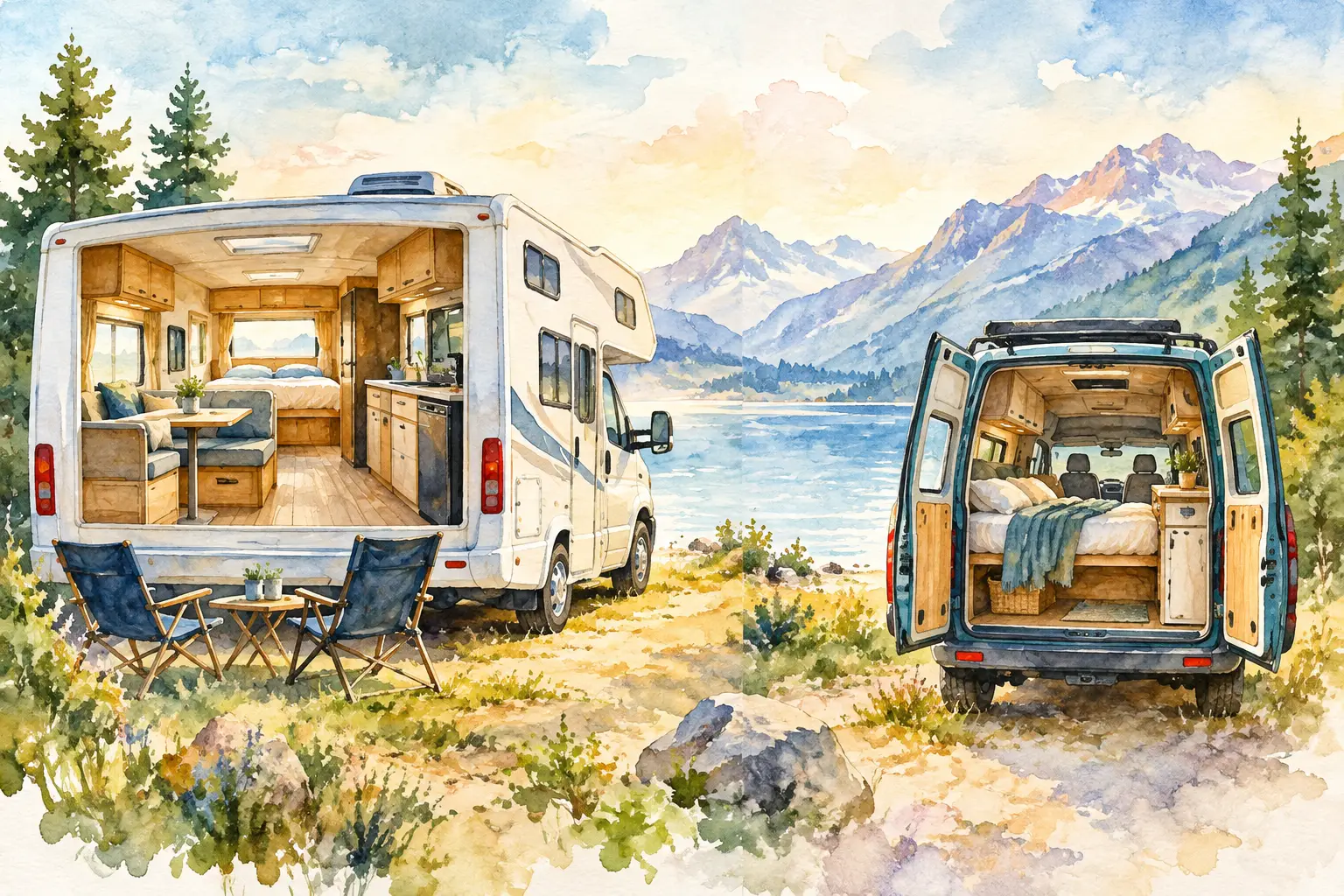
You notice the difference at 7am, not on the dealership forecourt. One person is making coffee, another is looking for a jumper, the dog is waiting to go out, and rain is tapping on the roof. That is when motorhome versus campervan space stops being a specification question and becomes the decision that shapes your whole holiday.
Both give you freedom on wheels. Both can take you from Bratislava to the Austrian lakes, through the Dolomites and onwards to the Croatian coast without unpacking every night. But the right choice depends less on the length of the vehicle and more on how you intend to live in it.
Motorhome versus campervan space: the real difference
A campervan is designed to be compact, easy to drive and pleasantly discreet. It is often the natural fit for a couple, solo traveller or active pair who expect to spend most of the day outside: hiking, cycling, sightseeing or swimming. Its living space is clever rather than generous. Every area usually performs more than one job.
A motorhome gives you more defined zones. There is usually greater standing room, a larger lounge, more kitchen worktop, a separate washroom arrangement and beds that do not need to become seats each morning. That extra room is not simply a luxury. For a family, a group of friends or anyone travelling for several weeks, it can remove many of the small compromises that make confined travel tiring.
Neither is automatically better. A campervan can feel wonderfully liberating on narrow Italian roads and in historic town centres. A motorhome can feel like a genuine small flat at a lakeside campsite when the weather has other ideas. Start by considering the hours between driving and sleeping, because those are the hours in which space matters most.
Living space when everyone is inside
The lounge is the first place to compare. In a campervan, the front cab seats usually swivel to join a compact dinette. It is an efficient arrangement, and it works very well for two people sharing breakfast, planning a route or enjoying a quiet evening. Add two more adults, wet coats and a dog, however, and it can become close quarters quickly.
Motorhomes commonly have a more open lounge, often with a proper dining table and seating for the travelling group. This makes a noticeable difference on a rainy afternoon in Slovenia or during an unhurried evening with cards and a local bottle of wine. You are less likely to have one person sitting on the bed because the seating area is already full.
Standing height matters too. Most modern campervans allow adults to stand comfortably, but their narrower body means passing one another takes coordination. A wider motorhome is easier when somebody is preparing lunch while somebody else needs the washroom. It sounds minor until day four of a trip.
Space is also about personal breathing room
Families often focus on the number of berths, but sleeping capacity alone is not the full story. Four sleeping places can mean four people fit overnight. It does not always mean four people can dress, eat and relax comfortably before heading out.
For two adults and younger children, a compact campervan can be a brilliant shared adventure, especially on a short break with good weather. For teenagers, two couples or friends with different routines, a motorhome’s separate areas are valuable. One person can read, another can make breakfast and someone else can still sleep without the entire vehicle having to pause.
Beds: fixed comfort or flexible layout?
This is often the clearest dividing line in motorhome versus campervan space. Many campervans use a rear bed that may require cushions, folding sections or a little rearranging. It is not difficult, and plenty of travellers enjoy the routine. The reward is a smaller vehicle that remains easy to park and drive.
Motorhomes are more likely to offer fixed rear beds, an over-cab bed, a drop-down bed or bunk beds. These layouts protect the lounge from becoming a bedroom every night. They are particularly helpful when children go to sleep earlier than adults, or when you want an early departure without packing away bedding first.
There is a trade-off. Fixed beds use space permanently, which can reduce garage storage or make the vehicle longer. If you are travelling as a couple and value a compact footprint more than a made-up bed, a campervan may still be the wiser choice. If restful sleep is non-negotiable, look closely at the bed dimensions, mattress access and how easy it is to get in and out without climbing over your travelling companion.
Kitchen and washroom space on the road
A campervan kitchen is enough for real meals, not just campsite snacks. Expect a hob, fridge, sink and practical storage, with layouts designed to make good use of a narrow space. It is ideal for coffee before a mountain walk, pasta after the beach or a simple supper by the sea. The limitation is preparation room: two enthusiastic cooks can feel crowded.
A motorhome usually provides more worktop, taller cupboards and a larger fridge. That gives families more freedom to carry breakfast supplies, picnic ingredients and several days of food without daily shopping. If you enjoy cooking on holiday, or have dietary needs that make self-catering important, this extra capacity earns its place quickly.
Washroom design deserves equal attention. Campervans may have a compact wet room, where toilet, basin and shower share one enclosed area. It is practical, self-contained and perfectly suitable for short trips or travellers who use campsite facilities. Motorhomes more often offer a separate shower area or a roomier washroom, making mornings easier for a full crew.
Do not assume bigger always means simpler. A larger washroom can be lovely, but it may come with a larger vehicle to manoeuvre. Think about the campsites and routes you actually want, rather than choosing space for a journey you are unlikely to take.
Storage: where will the holiday actually go?
Storage is where packing habits become decisive. Campervans reward travellers who pack thoughtfully. Soft bags, layered clothing and a smaller set of cooking gear work better than oversized hard cases. There is room for holiday essentials, but every item needs a sensible home.
Motorhomes generally give you more wardrobes, overhead lockers and, in many layouts, a rear garage. That is useful for folding chairs, outdoor equipment, pushchairs, larger suitcases and children’s toys. Cyclists, skiers and dog owners may find this additional capacity especially welcome.
A dog needs more than a sleeping spot. Consider space for food, a lead, towels, a travel bed and somewhere to settle without blocking the aisle. A campervan can work well with a smaller dog and an outdoors-focused trip. A motorhome is usually more comfortable for a larger dog, extended touring or days when muddy paws need drying before anyone gets back inside.
Driving and parking are part of the space calculation
The spacious option should still suit the roads you plan to use. Campervans feel familiar to many first-time drivers, particularly with an automatic transmission. They are easier in city car parks, ferry queues, supermarket stops and narrow village lanes. That can make spontaneous travel feel genuinely uncomplicated.
Motorhomes require more awareness of height, width and turning space, but modern models are designed to be reassuring rather than intimidating. Good mirrors, reversing cameras, navigation and a clear handover make a real difference. For a two-week family journey with several campsite stays, the comfort gained after parking may outweigh the extra care required while driving.
At Flying Dog, the most useful starting point is an honest conversation about your route, passengers, luggage and travel style. A premium vehicle should support the adventure, not ask you to adapt your plans around it.
Choose the layout that suits your holiday rhythm
Choose a campervan if you are usually travelling as a couple, want confidence in towns and mountain roads, pack light and expect the outdoors to be your main living room. It is compact freedom at its best.
Choose a motorhome if you are travelling with children, friends or a dog, value a permanent bed and indoor comfort, or plan a longer trip through changing weather. More room brings more relaxed mornings, easier meals and fewer negotiations over where everything goes.
Before setting off, try this simple test: picture your group inside the vehicle during two hours of heavy rain. If that image feels cosy, you have probably found the right amount of space. If it feels like a puzzle, choose the layout that gives everyone one small corner of their own.
