
How to Choose the Right Family Motorhome Layout
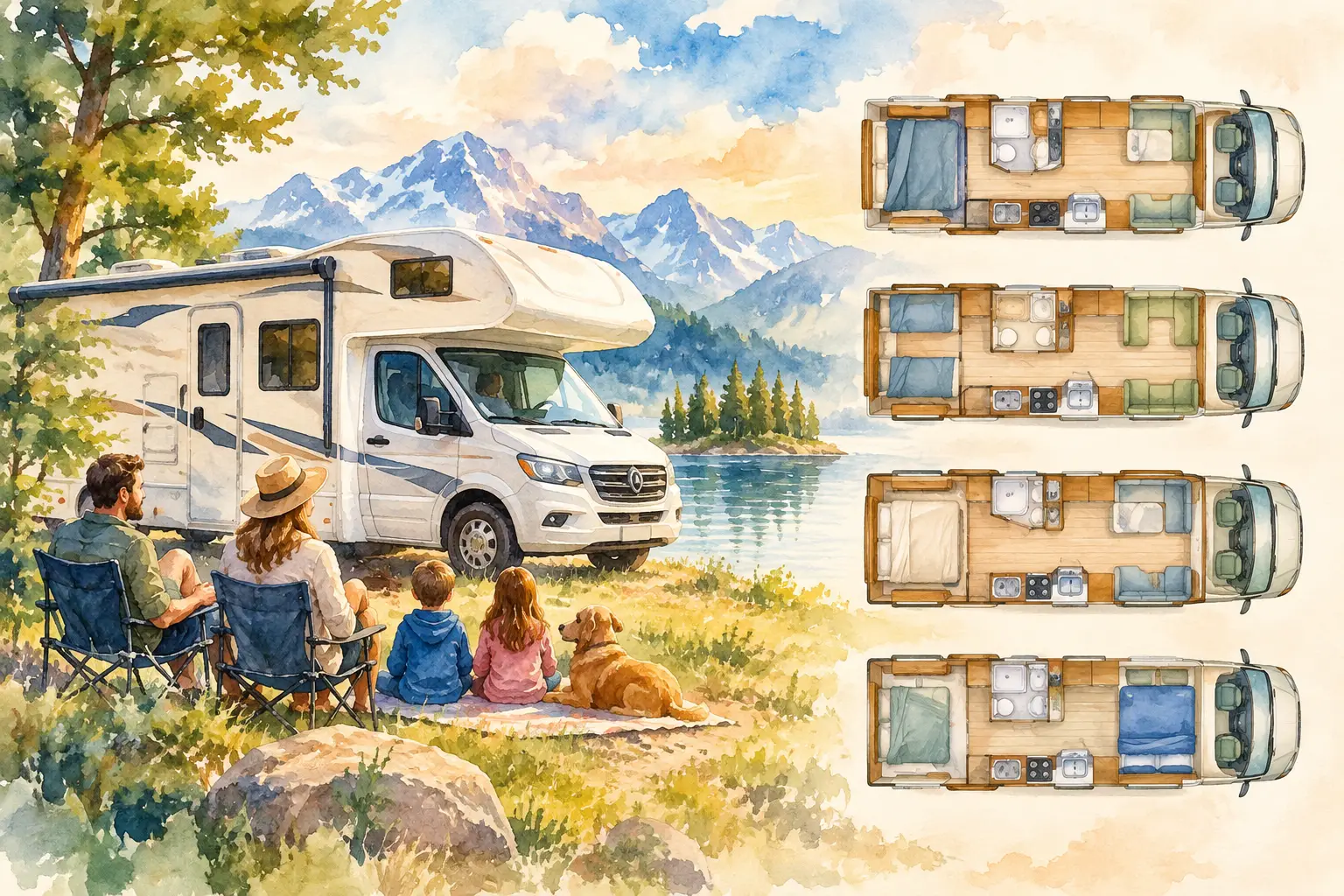
A beautiful route through the Dolomites can feel very different after a poor night’s sleep, a queue for the bathroom and nowhere to put four wet coats. When you choose a family motorhome layout, you are really choosing how your family will live between destinations – not simply how many beds appear on a brochure.
For a couple, almost any well-designed motorhome can work. For a family, the daily rhythm matters more: who goes to bed first, where everyone changes after a swim, whether children can sleep while adults still sit comfortably, and how much driving you plan to do. The right answer depends on your children’s ages, your route and your holiday style, but a few practical checks make the choice far easier.
Start with your family’s real travel routine
Before looking at floorplans, picture an ordinary holiday day. You might leave Bratislava after breakfast, stop in Austria for lunch, arrive at a lakeside campsite in Slovenia, cook dinner, shower children and settle down before planning tomorrow’s drive. Where will bags go? Can someone make a sandwich without blocking the corridor? Does the person using the washroom have privacy?
This is more useful than beginning with the official number of berths. A six-berth motorhome may be legally and technically able to sleep six people, yet feel cramped if every bed must be made up from the dining area each evening. Equally, a compact four-berth can feel wonderfully spacious for two adults and two young children who spend most of their time outdoors.
Think honestly about the following points: how long you will travel, how often you will change campsites, whether you cook most meals, and whether children still need daytime naps or early bedtimes. A two-week road trip through Croatia and Italy needs more storage and living flexibility than a long weekend with short drives.
Choose sleeping spaces before kitchen extras
A family layout succeeds or fails at bedtime. Good sleeping arrangements protect everyone’s mood, particularly on a rainy evening or after a long day in the driver’s seat.
Fixed bunks make family evenings easier
Rear bunk beds are often the most practical option for families with younger children. Each child has a dedicated sleeping space, bedding can stay in place and parents do not have to convert the lounge into beds every night. They also create a useful routine: children can settle down at the rear while adults enjoy a quiet drink or a film in the front lounge.
Bunks are not only for small children. Teenagers often value their own defined space too, especially if each berth has a reading light, shelf and charging point. Check the bed length and weight limit, however. A bed that is perfect for a seven-year-old may be too short or too enclosed for a fast-growing fourteen-year-old.
Over-cab beds suit some families, not all
An over-cab double bed gives a coachbuilt motorhome a large permanent sleeping area without taking space from the lounge. It can be an excellent solution for parents, leaving bunks or a rear bed for children.
The trade-off is access. Climbing a ladder is fun for confident older children but less convenient for adults who get up during the night, and it may not suit toddlers or anyone with limited mobility. Look at the headroom, ladder position and whether there is a safety net. These small details matter once you are actually using the bed every evening.
Drop-down beds preserve daytime space
A drop-down bed above the front lounge can offer a clever balance of comfort and compact dimensions. During the day, it disappears above the seating area; at night, it lowers to create a proper bed without rearranging cushions.
This layout is particularly appealing for a family of four who wants a more car-like driving experience than a larger coachbuilt provides. Still, consider the bedtime order. If the lowered bed blocks the lounge, anyone sleeping there may need to turn in at the same time as the rest of the family.
Dinette beds are best as occasional beds
A converted dinette is useful for a child, a friend or an occasional extra guest. It is less ideal as the main bed for someone every night, particularly if the family likes slow breakfasts or late evenings indoors. The conversion takes time, cushions can slide, and the seating disappears once the bed is made.
For a short trip, this may be a fair compromise. For a longer European holiday, permanent or quick-to-make beds usually make life calmer.
Check the lounge when every seat is occupied
Brochure photographs commonly show a lounge with only two people sitting comfortably. Ask what it feels like with the whole family inside, coats drying, games on the table and a dog asleep by the door.
A face-to-face lounge gives a relaxed, sociable feel and can be brilliant on campsite days. A dinette with belted travel seats is more compact and often works well for young families, especially when the table becomes a homework, puzzle and meal space. Swivel cab seats can add valuable room once parked, but they should not be the only seating you rely on.
Try to imagine wet-weather living rather than sunny photographs. Can four people sit without someone perching on a bed? Is there a clear route to the washroom? Can the table stay up while somebody cooks? For families travelling in spring or autumn, lounge comfort deserves just as much attention as the number of berths.
Match belted seats to the people travelling
Sleeping capacity and travelling capacity are not the same thing. Every passenger needs a proper, forward- or rear-facing belted seat for road travel. Check not only the number of belts but their position, headrests and suitability for the child seats your family uses.
Young children may need ISOFIX points, depending on the vehicle and car seats involved. Older children should still have enough legroom for a full day between Bratislava, Vienna, northern Italy or the Croatian coast. It is worth fitting or checking your actual child seats before committing to a layout.
Do not overlook payload either. A motorhome carrying four or five people can quickly gain weight through passengers, water, bicycles, outdoor furniture, food and holiday luggage. A practical layout includes enough permitted payload for the way you genuinely pack, not just for a minimal overnight stop.
Storage is where family layouts earn their keep
Family equipment has a habit of multiplying. You will have towels, spare clothes, walking boots, swimming gear, toys, chargers, food, camping chairs and perhaps a pushchair or dog accessories. A large rear garage is valuable, but its shape matters as much as its size.
Look for exterior access on both sides, tie-down points and a garage high enough for bulky items. Inside, check wardrobes, under-seat lockers, kitchen cupboards and somewhere to put shoes near the entrance. A tall wardrobe sounds useful until it steals space from bunks or makes the washroom awkward to use.
A separate space for dirty outdoor gear is especially welcome on active trips. It stops sand from a Croatian beach or mud from an Alpine walk spreading through the living area. If you travel with a dog, choose durable upholstery and a layout that leaves a safe floor space without blocking the aisle.
Do not treat the washroom as an afterthought
One compact washroom can work perfectly for a small family, provided you use campsite facilities often. For longer stays off-grid or early starts before a ferry, a separate shower and toilet area can make mornings much easier.
A central washroom can divide the motorhome into a parents’ zone and a children’s zone, which improves privacy. However, it may narrow the walkway. A rear washroom can feel more spacious but sometimes reduces garage volume or pushes beds closer together. Open every door in your mind: can the shower screen, wardrobe and fridge all be used without a traffic jam?
Consider vehicle size and the roads you want to enjoy
The largest layout is not automatically the best family choice. A longer coachbuilt can offer superb beds, storage and a generous lounge, but it may feel less relaxed on narrow village streets, busy parking areas and mountain routes. A more compact motorhome or campervan is easier to manoeuvre and can open up places that feel daunting in a larger vehicle.
This is where your itinerary matters. If you expect to stay three or four nights at family-friendly campsites and use bikes or public transport, extra living space may be worth having. If your plan is a fast-moving tour through several countries, a shorter vehicle with an automatic gearbox can reduce driving fatigue considerably.
At Flying Dog, families can compare modern, fully equipped motorhomes and campervans in person, rather than trying to judge every detail from a floorplan alone. Sit in every travel seat, open the lockers, test the bed access and ask the question that matters most: could we happily spend a rainy day here?
A practical way to choose a family motorhome layout
If you are torn between two options, use a simple evening test. Imagine arriving late with tired children. One adult starts dinner, another helps with pyjamas, someone needs the toilet, and bags are still by the door. The better layout is the one that lets all of this happen without moving half the vehicle around.
Then picture departure morning. Beds need clearing, breakfast needs making and everyone needs a seat with a belt. A motorhome should make freedom on wheels feel easier, not like a daily packing puzzle.
Choose the layout that gives your family room to rest, store the essentials and travel safely – then leave enough space in the plan for the unplanned swim, mountain stop and sunset that make the journey yours.
