
Campervan Child Seats: A Family Safety Guide
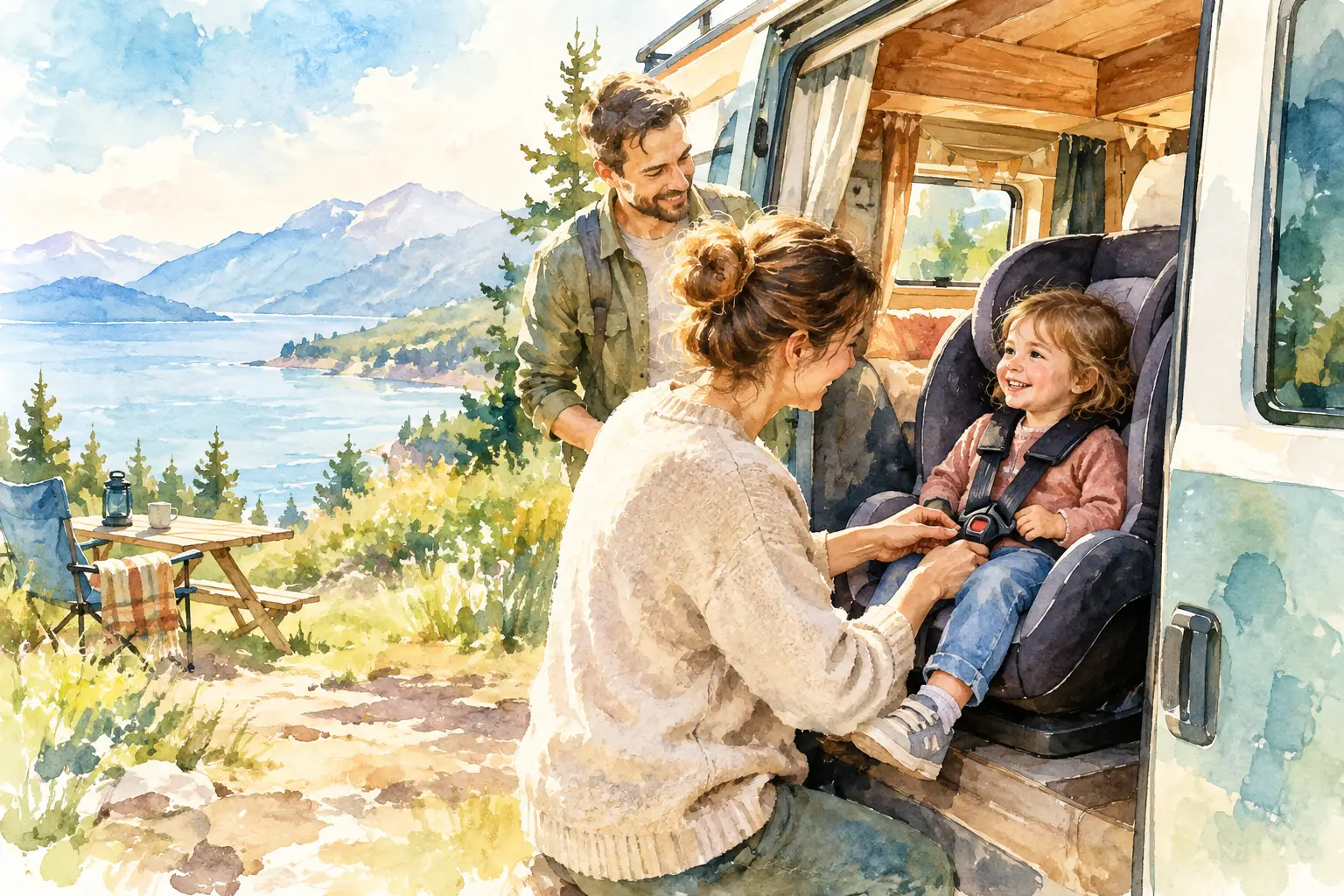
A family road trip can begin with the Dolomites on the sat-nav, breakfast by an Austrian lake and no hotel check-out clock. But before the first kilometre, campervan child seats deserve proper attention. In a motorhome, the right seat is not simply the one that fits your child – it must also be compatible with the vehicle’s approved travelling seats, belts and anchor points.
For parents, this can feel less exciting than choosing a route through Slovenia or finding the perfect campsite in Croatia. Yet getting it right gives everyone the confidence to enjoy the freedom on wheels. Here is how to plan safe, comfortable travel for younger passengers in a campervan or motorhome.
Start with legal travelling seats, not sleeping berths
The number of people a motorhome can sleep is not necessarily the number who can legally travel in it. This is one of the most common misunderstandings among first-time renters. A vehicle may have several beds, but only a defined number of road-legal passenger seats with seatbelts.
Children must travel only in designated, forward- or rearward-facing seats fitted with an appropriate belt or approved child-seat mounting system. Side-facing lounge benches may look spacious when parked, but they are not suitable for carrying passengers while driving.
Before booking, ask for the number and location of belted travel seats. For a family, the layout matters as much as the total number. Two rear travel seats may work perfectly for two children, while a larger family may need a motorhome with a dinette arrangement that provides more approved positions. If one adult needs to sit near a younger child, check the full seating plan rather than assuming the cab and living area will suit your group.
Choosing campervan child seats for your child
The child seat must match three things: your child, the vehicle and the journey. It is tempting to focus only on age or weight, but height limits, harness requirements and the seat manufacturer’s instructions are equally relevant.
For babies and very young children, a rearward-facing seat generally offers the best protection for the head, neck and spine. Older children may use a harnessed forward-facing seat or a high-backed booster when they meet the seat’s stated requirements. A booster cushion alone can be less supportive for long journeys, particularly when a child falls asleep, and may not position the belt as well in every motorhome seat.
The key question is whether your chosen model is approved for use with the particular belt arrangement in the vehicle. Many campervan rear seats use three-point belts, which can accept a wide range of child seats. Others may have different configurations or seating shapes that affect the fit. Never assume that ISOFIX is available simply because it is common in modern cars. Some motorhomes have ISOFIX positions, while others rely on seatbelt installation.
If you are hiring a vehicle, tell the rental team the ages, heights and approximate weights of your children before collection. A helpful provider can confirm the available travel seats and advise whether you should bring your own familiar seats or arrange suitable equipment in advance. At Flying Dog, this conversation is worth having before you finalise your route – it helps ensure the vehicle layout supports the whole family, not just the luggage list.
Why the seat shape matters
Motorhome dining-area seats can be firmer, flatter or more upright than car seats. A child seat that installs securely in your family car may sit at a different angle in a campervan. For rearward-facing infant carriers especially, check that the recline angle remains within the child-seat manufacturer’s permitted range.
A secure installation should not involve excessive movement at the belt path. Follow the child-seat instructions exactly, route the belt correctly and remove slack before setting off. If the seat has a support leg, make sure it rests on an approved solid floor area. Some vehicle floors contain storage compartments, raised bases or other features that can affect support-leg use.
The front passenger seat is not always the easy answer
Putting a child in the front can seem practical: easier snacks, easier reassurance and a clear view ahead. In many cases, though, the rear is the better place for a child seat. Airbags, seat geometry and vehicle instructions all need to be considered.
A rearward-facing child seat must never be used in front of an active frontal airbag. If the manufacturer permits that position and the airbag can be switched off, confirm it is genuinely deactivated before fitting the seat. For forward-facing children, check both the motorhome and child-seat instructions, and move the passenger seat back where possible. Visibility and convenience should never override the approved installation guidance.
There is another practical point: the front cab can become warmer in strong sunshine and may feel more exposed during long motorway stretches. A correctly fitted rear travel seat, with an adult nearby where the layout allows, is often the calmer choice.
Check the rules for every country on your route
European family road trips often cross borders in a single day. Child-restraint rules are broadly similar across many countries, but details can vary, including age, height, permitted restraint types and front-seat use. The rules of the country you are driving in apply, not just the rules where you collected the motorhome.
Plan for the strictest sensible standard rather than looking for loopholes. Use an approved child restraint that fits your child properly, keep them restrained for every journey and avoid carrying more passengers than the registered travel-seat capacity. This approach is safer and makes border-to-border travel less stressful.
Do not treat short hops differently. The drive from a campsite to a supermarket, ferry terminal or lakeside parking area is still a road journey. Children should be seated and restrained before the motorhome moves, even if everyone is eager to reach the next view.
Make fitting part of the handover
Collection day can be busy. There is luggage to load, cupboards to explore, fresh water to understand and an exciting route waiting outside Bratislava or Vienna. Set aside time for the child seats before you leave.
Ask a member of the team to show you every approved travel position and identify the relevant belts or ISOFIX points. Then install your own seats yourself, with the instructions to hand, so you know how they work after a lunch stop or an overnight stay. A staff member can provide practical reassurance, but the child-seat manufacturer’s directions remain the authority for that particular seat.
Use this simple pre-departure check:
- Confirm each child has an approved, belted travel position.
- Check belt routing, buckle engagement and the seat’s stability.
- Make sure head restraints, recline settings and support legs are used as instructed.
- Stow tables, loose toys, heavy bottles and other items that could move under braking.
- Keep seat instructions accessible rather than buried beneath holiday clothes.
That final point matters more in a motorhome than in a car. The living area makes family travel wonderfully comfortable when parked, but loose objects can become hazards on the move. Put games, books and snacks in closed storage or soft bags, and use only light, quiet items during a journey.
Plan the drive around real family comfort
A premium campervan can make long-distance travel easier, but it cannot make children enjoy six uninterrupted hours in a seat. Build in regular stops for toilets, food and movement. A short break before everyone becomes restless is usually more effective than pressing on to the next town.
Choose practical stops, not only scenic ones. A service area with safe parking, toilets and room to walk can be more useful than a dramatic viewpoint with no space to open the side door. Save the beautiful stops for when you can properly enjoy them.
During hot weather, park in shade when possible and ventilate the cab and living area before loading children back in. In colder months, remove bulky coats before tightening the harness. Thick layers can create slack between the child and restraint, even when the straps appear snug.
Avoid relying on the motorhome’s beds or lounge as places for children to rest while travelling. Everyone stays in their designated seat until the vehicle is parked safely. It may feel strict, but it is the habit that protects the relaxed spirit of the trip.
A little preparation protects the adventure
The best family motorhome holidays feel wonderfully unplanned once you are on the road: an extra night beside a lake, a detour to a hilltop village, dinner outside while the children draw at the table. That freedom begins with a careful seating plan.
Bring the child-seat details, ask clear questions at booking and collection, and give yourself ten unhurried minutes to check every buckle before departure. Then the road ahead can belong to the good stuff: the first mountain pass, muddy shoes by the door and children who remember the journey as part of the holiday.
