
Solar Powered Motorhome Hire Europe Explained
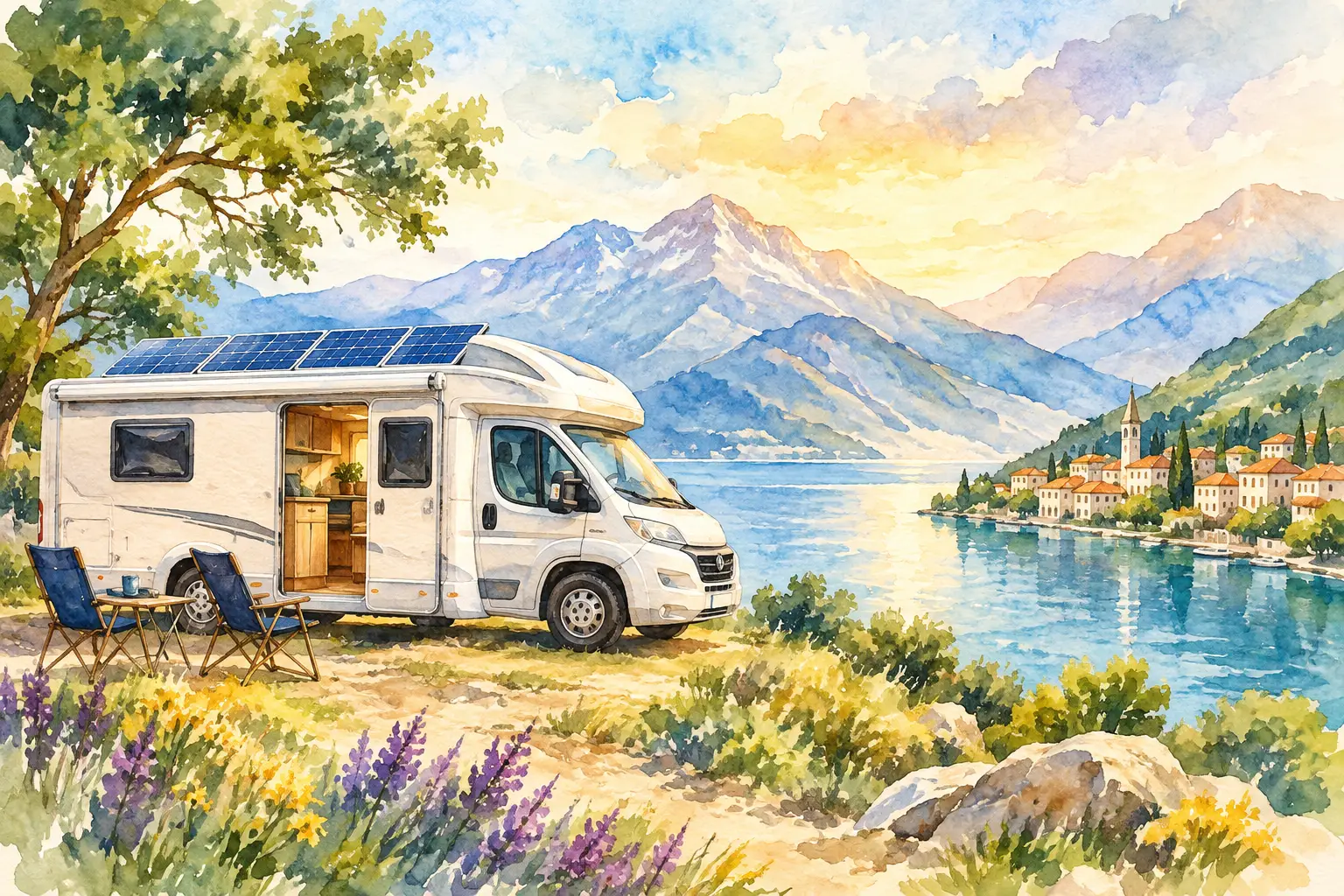
A mountain lay-by in the Dolomites, a quiet Slovenian vineyard, a Croatian beach road at sunset – these are the moments that make solar powered motorhome hire Europe so appealing. You park up with a view, make coffee, charge your phones and enjoy the freedom of staying a little longer without immediately searching for an electric hook-up.
There is one useful reality check, though. In most motorhomes, solar power does not drive the vehicle. It supports the leisure battery: the separate battery that supplies the living area. Used well, it can make your European road trip more independent, comfortable and flexible. Expected to do everything, it can lead to a flat battery and a less relaxing morning.
What solar power in a motorhome really means
A roof-mounted solar panel collects daylight and sends power through a controller to the leisure battery. That battery runs the habitation equipment, depending on the vehicle: interior lights, water pump, USB sockets, heating controls, fridge electronics and often a television or small inverter.
The engine has its own starter battery. Solar may help maintain it in some vehicle systems, but its main job is usually keeping the living area supplied while parked. The motorhome itself runs on diesel, not sunshine.
This distinction matters when choosing a vehicle. A solar-equipped motorhome is excellent for reducing dependence on campsites, but it is not an invitation to use every appliance as if you were connected to mains electricity. Hair dryers, kettles, air fryers, electric heaters and air conditioning demand a great deal of energy. They can drain a leisure battery quickly, even with a good solar panel on the roof.
Why solar matters on a European road trip
Europe rewards travellers who can stay flexible. You may find a peaceful farm stop in Austria, arrive late at a well-run camper stop in Italy, or decide that one more night beside a lake in Hungary would be better than rushing on. A charged leisure battery gives you more choice in those moments.
It is especially useful for couples, families and dog owners who do not want every overnight stop dictated by a campsite socket. You can keep lighting, water and essential charging available while spending time in places where the scenery is the main event.
Solar also suits a slower style of travel. If you drive for a few hours, stay for two nights, then move on, the panel can replace some of the energy used during the day. If you cover long distances daily, the vehicle alternator will also charge the leisure battery while driving. The two systems work well together.
That said, solar is not a substitute for sensible planning. Wild camping rules vary greatly between countries, regions and even individual municipalities. A motorhome that can remain off-grid does not mean you may park overnight anywhere you like. Always use permitted camper stops, campsites or legal parking areas, and leave every place as you found it.
Solar powered motorhome hire Europe: what to check before booking
The phrase sounds simple, but equipment varies from one motorhome to another. Before you book, ask the rental company what is actually fitted and what is included in the quoted hire. A clear answer is far more valuable than a vague promise of an ‘off-grid’ vehicle.
Ask about the solar system and leisure battery
Find out whether the vehicle has a solar panel, its approximate output and the size or type of leisure battery. You do not need to become an electrical engineer, but these details indicate how comfortably the motorhome will support your plans.
A larger panel and a modern lithium leisure battery generally offer more usable capacity than a small panel paired with an older lead-acid battery. But the right setup depends on your habits. A couple using lights, a water pump and phone charging has very different needs from a family charging several devices, watching films and working remotely.
Also ask whether the fridge runs from gas, 12V power or mains electricity while parked. Compressor fridges can be efficient but draw from the battery. Absorption fridges are often very practical off-grid when operated on gas. Knowing how your fridge works helps you plan without unpleasant surprises.
Check the appliances, not just the panel
A premium motorhome can feel like a compact hotel room, but electrical use still has limits. The most helpful question is: what do you want to power when you are parked?
For most travellers, solar can comfortably support low-draw essentials in good weather: LED lighting, phones, tablets, the water pump, control systems and occasional USB charging. It may also support a laptop for limited use, depending on the battery, inverter and sunlight.
High-draw equipment changes the picture. If your holiday must include a hair dryer every morning, a coffee machine, an electric bike charger, medical equipment or long periods of laptop work, plan regular hook-up nights. There is nothing less adventurous about a campsite with excellent facilities, a proper shower block and a chance to recharge everything fully.
Confirm support, handover and insurance
Solar equipment is only useful if you understand the control panel and know what to do if the battery level drops. A proper handover should show you the battery monitor, charging settings, fresh-water controls, heating and fridge operation. First-time motorhome travellers often find this ten-minute explanation is what gives them confidence for the whole trip.
Choose a company that can answer practical questions during your journey, not simply hand over the keys. At Flying Dog, the focus is on fully equipped, modern motorhomes, clear guidance and direct technical support, so you can spend less time second-guessing controls and more time enjoying the road.
It is equally wise to check insurance cover for the countries on your route. A road trip from Bratislava can easily take in Austria, Slovenia, Italy, Croatia and Hungary. Comprehensive Europe-wide cover and transparent rental terms make it easier to change direction when a favourite place deserves another day.
How to make your battery last longer
Good off-grid travel is mostly about simple habits. Park in open daylight where possible, while remembering that shade may be essential for comfort in hot weather. A panel cannot produce much when it is covered by trees, snow, heavy cloud or your roof box.
Charge phones and cameras while driving, rather than leaving all charging for the evening. Switch off lights you do not need, avoid leaving televisions on standby and use USB charging instead of a large inverter where possible. Keep an eye on the leisure battery display each morning and evening. You will quickly learn what your particular routine uses.
Water is part of the equation too. A full fresh-water tank adds weight, and an off-grid stop requires thoughtful use of both fresh water and waste capacity. Short showers, careful washing-up and regular service stops make longer stays much easier. Solar power helps with electricity; it does not refill your water tank or empty the toilet cassette.
Where solar works best, and where it does not
Solar performs beautifully during long, bright summer days in southern and central Europe. A sunny route through Slovakia, Austria, northern Italy or the Adriatic can provide strong charging conditions, particularly when the vehicle is parked in the open.
Its limits show up in late autumn, winter and heavily shaded locations. Low sun, short days and cloudy Alpine weather can reduce output substantially. In northern Europe, shoulder-season travellers should see solar as helpful support rather than their sole energy plan.
Heat creates another trade-off. A sunny pitch may charge your battery efficiently, but the motorhome can become warmer inside. In southern Italy or Croatia, a shaded campsite pitch may be the more comfortable choice, even if the solar yield is lower. Freedom means choosing what matters most that day.
A smarter way to plan an off-grid route
Rather than trying to avoid campsites completely, mix independent overnight stops with occasional full-service stays. Spend a night at a legal camper stop after a day of driving, then book a campsite every few days to plug in, refill water, empty waste and enjoy the facilities.
This approach gives you the best of both worlds. You retain the spontaneous feeling that makes motorhome travel special, while avoiding the stress of watching every battery percentage. It also gives families a welcome chance to reset, wash clothes and let children enjoy space to play.
For a first trip, begin with short off-grid stays. One night away from hook-up lets you understand the vehicle without pressure. By the middle of your holiday, you will know whether you are happy with two or three nights between campsites or prefer a more connected rhythm.
A solar-equipped motorhome is not about living with fewer comforts. It is about using the right comforts in the right place, then waking up with the freedom to choose the next view.
