
What to Pack for a Campervan Holiday in Europe
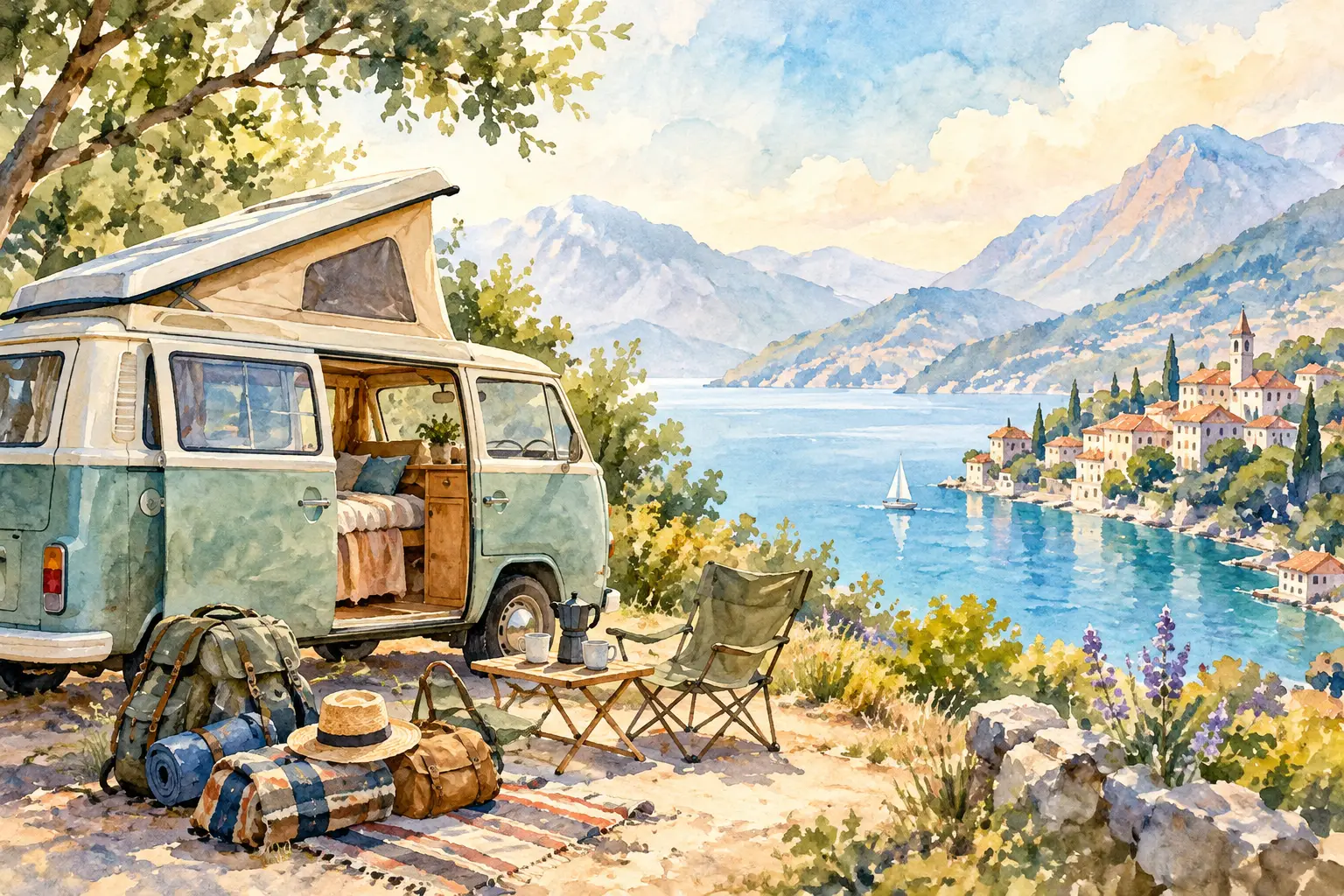
The first evening of a campervan trip tells you whether you packed wisely. You have found a beautiful lakeside pitch, the coffee is on, and then somebody realises the warm layer, torch or bottle opener is still at home. When you pack for a campervan holiday, the aim is not to take everything. It is to bring the small number of useful things that make each stop feel easy, comfortable and properly yours.
A well-equipped modern campervan already covers more than many first-time travellers expect. Before filling bags with cookware, bulky bedding or campsite gear, check exactly what is included with your rental. At Flying Dog, our vehicles are prepared for comfortable European road travel, so you can pack around the equipment on board rather than duplicating it.
What to Pack for a Campervan Holiday
Think in terms of living in a compact, clever space. Every item should earn its place by being useful often, folding down small or making the journey more enjoyable. Soft holdalls are usually far better than rigid suitcases: they fit into lockers, under beds and awkward corners once you are parked.
Start with the route, not the bag
Your packing list changes with your plan. A summer loop through Croatia and Italy calls for swimwear, sun protection and airy clothes, but evenings in the Dolomites, Austria or Slovenia can turn cool even after a hot day. Travelling in spring or autumn means layers matter more than a large wardrobe.
Also consider your rhythm. If you expect to move every day, keep arrival essentials accessible: charging leads, a light jacket, wash bag and a change of clothes. If you plan to stay at campsites for several nights, bring a little more outdoor comfort, such as camp chairs, a picnic blanket or books for relaxed afternoons.
Pack clothes that layer and dry quickly
Campervan holidays are active holidays. You might be walking through a historic town in the morning, swimming at lunch and cooking outside as temperatures fall. Pack clothes you can combine rather than separate outfits for every day.
Bring comfortable walking shoes with a reliable sole, plus sandals or easy slip-on shoes for the campsite and shower block. One smart-casual outfit is useful for a special dinner, but most travellers need fewer dressy clothes than they expect. A lightweight waterproof jacket, warm mid-layer and a compact umbrella are worth carrying in every season.
For a one- or two-week trip, planning for a small laundry stop is sensible. Quick-drying tops, underwear and swimwear reduce the amount you need to bring and leave more room in the lockers. A small foldable laundry bag keeps worn clothes from taking over the living area.
Keep the kitchen simple and flexible
Cooking is one of the real pleasures of freedom on wheels, especially when the view is better than any restaurant terrace. Still, this is not the moment to pack your entire kitchen. Buy fresh food as you travel, enjoy local markets, and keep a compact starter selection for the first day or two.
A few practical extras make a noticeable difference: reusable water bottles, a thermos or travel mug, food storage containers, a sharp small knife if it is not supplied, and reusable shopping bags. Add a favourite coffee or tea, a few snacks for driving days, and basic dietary essentials that may be difficult to find quickly across borders.
Avoid bringing too much chilled food from home. It takes valuable fridge space and can turn into waste when plans change. Europe is made for spontaneous stops at bakeries, farm shops and supermarkets, so leave room to discover what is local.
Make evenings and sleep feel easy
Even a luxury campervan benefits from a few personal comforts. Pack sleepwear, earplugs, an eye mask and your preferred toiletries. A compact torch or headlamp is especially handy when returning from the facilities after dark, checking a pitch late in the evening or searching a storage locker.
Insect repellent, after-sun lotion and a small personal first-aid kit deserve a place in the bathroom bag. Include plasters, pain relief, any prescription medicine and treatment you know your household uses. Keep medication in your day bag rather than buried in a rear locker.
For long, sunny days, take sunglasses, hats and sun cream. For rainy ones, a packable poncho can be surprisingly useful, particularly when you are setting up outside or walking the dog before bed.
Bring outdoor gear you will genuinely use
The best campervan moments often happen just outside the door: breakfast under the awning, children drawing at the table, or an unplanned sunset above an Alpine valley. A few lightweight outdoor items extend your living space without creating clutter.
Consider bringing these if they suit your plans:
- A picnic blanket for beaches, lakesides and grassy pitches.
- Microfibre towels, which dry fast and take up very little room.
- A day rucksack for walks, city visits and groceries.
- A refillable water carrier for pitches where the tap is not close by.
- A small set of games, cards or colouring supplies for quiet evenings.
If cycling, paddleboarding or hiking is central to your holiday, check storage and transport arrangements before you travel. Large equipment can affect payload, access to the garage and how quickly you can pack up each morning. Sometimes hiring gear locally is the lighter, simpler option.
Packing for children and dogs
Families do not need to fill every cupboard with toys. Choose a few familiar favourites that work in a small space: cards, a travel game, sketchbooks, headphones and one cosy item for bedtime. Give children a designated locker or basket, so their things have a home from the first night.
For a dog-friendly campervan holiday, pack a lead, harness, water bowl, food, treats, towel, waste bags and a familiar blanket or bed. A long lead can be useful at suitable campsites, but always follow local rules and keep your dog safe around roads, wildlife and hot surfaces. In southern Europe, plan walks for cooler parts of the day and never leave your dog alone in a warm vehicle.
Do not forget documents and driving essentials
Keep passports, driving licences, payment cards, travel insurance details and booking confirmations together in a waterproof document wallet. If you are travelling across several countries, check entry requirements, toll systems, low-emission zones and any rules that apply to your route before departure.
Take a European Health Insurance Card or equivalent cover where applicable, plus comprehensive travel insurance. Download offline maps as a backup, even if your campervan has GPS. Mobile signal can disappear in mountain valleys and remote coastal areas at exactly the moment you want to check the next turn.
A charging cable for each device, a power bank and a car charger prevent unnecessary friction on the road. It is also useful to save campsite booking numbers, roadside assistance details and emergency contacts both digitally and on paper.
Pack light enough to enjoy the vehicle
Overpacking does more than fill cupboards. It makes daily life slower. You spend longer searching for things, moving bags before bedtime and repacking before every drive. Leave a little empty space for groceries, souvenirs and the unexpected discoveries that make a European road trip memorable.
Before you leave, place heavier items low down and secure loose objects for driving. Keep everyday essentials close to the door or living area, and reserve deep storage for things you will use less often. Five calm minutes of organisation at pickup can save plenty of frustration later.
Pack for comfort, pack for changing weather, then leave room for freedom. The road will provide the views, the local food and the stories. Your campervan should give you an easy place to enjoy them.
