
Motorhome Handover Checklist Guide for First Trips
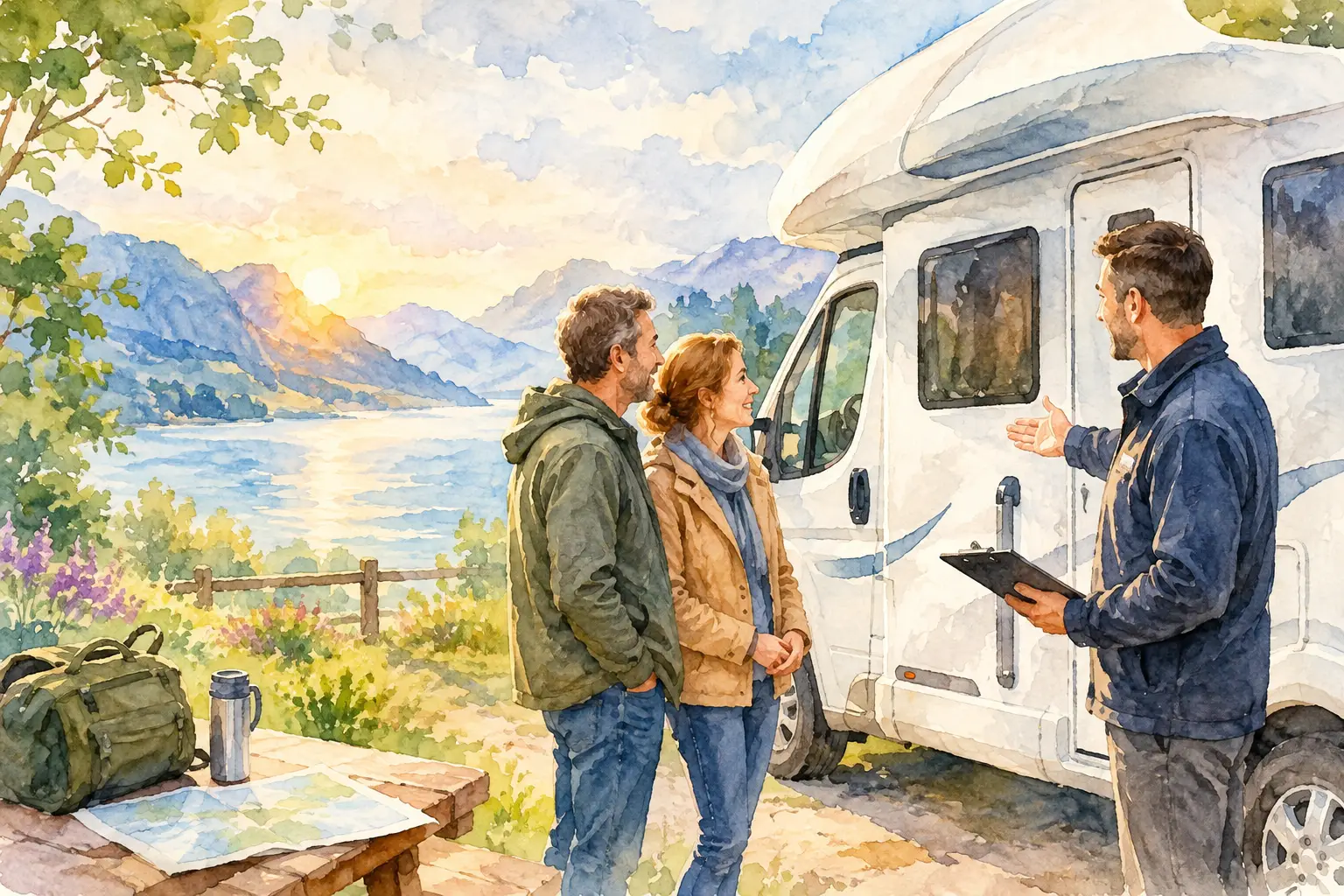
The first ten minutes after collecting a motorhome can shape the first ten days of your holiday. You may be standing in Bratislava with the Dolomites, the Croatian coast or a quiet Slovenian lake ahead of you, but before you turn the key, take the time for a proper introduction. This motorhome handover checklist guide is designed to help you leave feeling excited, not overloaded – especially if this is your first trip in a campervan.
A good handover is not a formality. It is where a modern, self-contained vehicle becomes your comfortable home on wheels. Ask questions, open cupboards, press buttons and practise the essentials while someone is there to help. Five extra minutes at collection can save a great deal of uncertainty on your first evening at a campsite.
Why the handover deserves your full attention
Motorhomes bring together the systems of a car, a small flat and a campsite pitch. Automatic transmission and modern driving assistance make the road feel approachable, but the living area still has its own routines: fresh water, waste water, gas, heating, electricity, beds and storage all need a little familiarisation.
There is no need to memorise every setting. What matters is knowing what you will use on day one, where to find the key controls and how to get help if something does not behave as expected. At Flying Dog, a personal handover means you can look at the actual vehicle you will be driving rather than trying to interpret a generic video in a car park.
If you are travelling as a couple, decide who will focus on the cab and who will listen out for the habitation systems. Families can involve older children too: showing them the safe place for shoes, charging cables and outdoor chairs makes life easier once the journey starts.
Motorhome handover checklist guide: start with the cab
Begin where your driving day begins. Sit in the driver’s seat and adjust the seat, mirrors and steering wheel before anyone rushes to load luggage. Confirm how the automatic gearbox selects drive, reverse and park, and ask about the electronic parking brake if fitted. These details are simple when stationary and surprisingly less simple at a busy fuel station.
Make sure you can confidently use the satellite navigation, cruise control, headlights, windscreen wipers, demisters and reversing camera. Ask whether the navigation unit has motorhome dimensions entered. A route suitable for a family car can include a low bridge, narrow lane or awkward town-centre turn that is no fun in a larger vehicle.
Check the vehicle’s height, width and length, then put those figures somewhere visible. Height is the number you will use most often. Pay attention to car parks, fuel station canopies, barriers, balconies and tree branches. When reversing, use a second person outside whenever conditions allow. Agree on clear hand signals before you need them.
You should also locate the warning triangle, high-visibility vests, first-aid kit, tyre repair equipment and documents required for your journey. If you plan to cross borders, confirm that your insurance and paperwork cover every country on your route. Europe-wide cover offers reassurance, but it is still wise to discuss your itinerary before departure.
Make the living area feel like home
Once you have covered the driving position, move through the living space with every cupboard and hatch open. This is the part of the handover that turns a premium motorhome from impressive to genuinely useful.
Ask for a demonstration of the following essentials:
- How to lock and unlock the habitation door, windows, rooflights and external storage lockers.
- How the table converts, where the beds are stored and how to secure them for driving.
- How the fridge works on different power sources and what must be done before setting off.
- How to operate the heating and hot water controls, including the correct ventilation around them.
- Where the gas cylinder or gas system is located, and how to turn it off safely.
- How to use the toilet cassette, including the correct chemicals and the emptying point.
Do not be shy about making up a bed or opening the toilet cassette yourself. It is better to learn the knack while relaxed at collection than in the rain after a long drive. If you are travelling with children or a dog, check which areas must stay closed during driving and where loose items can be stored safely.
A fully equipped rental should make the first night easier, but it helps to check what is actually packed. Look at the cooking equipment, plates, cutlery, electrical cables, levelling aids, hose and outdoor furniture. You do not need to inspect every spoon. The aim is to understand what you have, what needs careful packing and what you might want to buy before heading into the mountains or towards the coast.
Understand water, electricity and waste before you leave
The most common first-timer worries are rarely dramatic. They are usually practical questions such as: Which cap is for fresh water? Why is the pump making a noise? Where do we empty the grey water? A clear explanation at handover makes these routine jobs straightforward.
Find the fresh-water filler, confirm whether the tank is full and ask how the level is shown on the control panel. Fresh water is for washing, cooking and, depending on local guidance, drinking. Many travellers prefer to carry bottled drinking water in unfamiliar areas, while others fill from trusted campsite supplies. It depends on your route and personal preference.
Then identify the grey-water outlet. Grey water comes from the sink and shower, and it must be emptied only at a designated service point. Toilet waste is separate and belongs in the appropriate chemical toilet disposal point. Never empty either into a roadside drain or nature spot, however remote it may look.
Ask how to connect to campsite electricity and where the breaker is located. When you arrive at a pitch, park first, level the vehicle if needed, connect the cable correctly and only then settle into the evening. The order matters because a level motorhome helps the fridge work efficiently and makes sleeping much more comfortable.
Check the condition together, with no awkwardness
A transparent walk-around protects everyone. Take photos or a short video of the outside and interior before departure, even when the vehicle is new and spotless. Record existing marks, note the fuel level and confirm the return arrangements. This is not about expecting a problem. It is the sensible habit that lets you concentrate on the holiday.
Look carefully at the windscreen, alloy wheels, mirrors, awning and lower bodywork. These are the areas most likely to meet a low bollard, branch or campsite post. Check that the doors, windows and lockers close properly, and confirm how the awning should be used. Awnings are brilliant for shade, but they should never be left out in strong wind or when you go sightseeing.
Before leaving, confirm the emergency contact process. Save the support number in more than one phone, know what information will be needed if you call and understand what to do in the event of a warning light, puncture or accident. Technical support is most valuable when you know exactly how to reach it.
Take a short practice drive before the real journey
If possible, use the first few kilometres to get comfortable rather than aiming straight for a motorway. Practise turns, braking and parking on quieter roads. The vehicle may feel larger than a car, yet most drivers adapt quickly once they allow extra space and slow down early.
Plan a gentle first day. A two-hour drive to a well-reviewed campsite is often a better beginning than a six-hour push across several borders. You will have time to set up in daylight, test the heating, cook a simple meal and discover whether you packed the coffee in the cupboard you expected.
The point of a handover is not to make motorhome travel feel complicated. It is to remove the small uncertainties that distract from it. Ask every question you have, keep your first day unhurried, and soon the vehicle will feel less like a rental and more like your own comfortable base for wherever the road leads.
