
What Motorhome Kitchen Equipment Is Included?
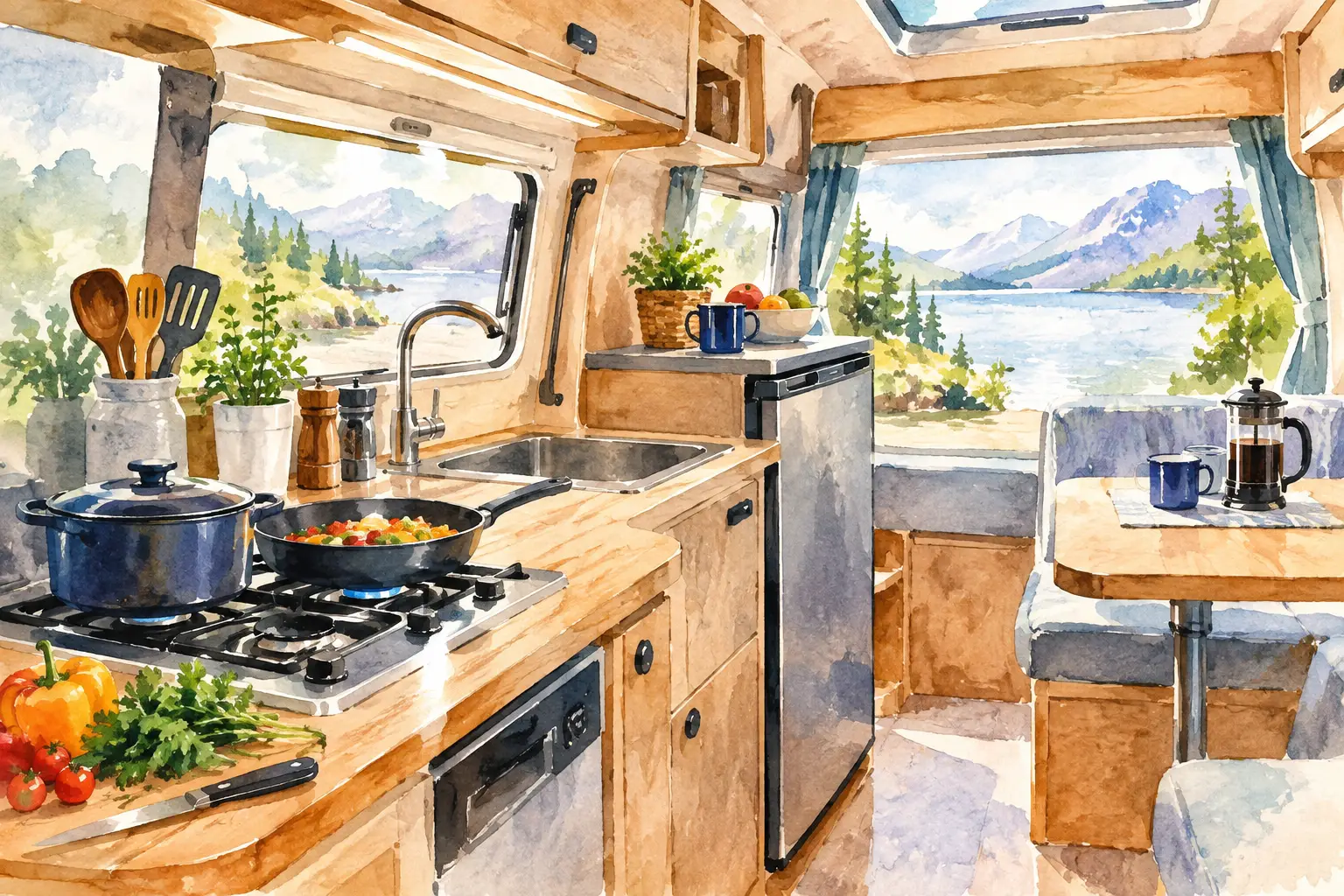
When you search for “motorhome kitchen equipment included”, you are really asking a much more practical question: can we collect the keys in Bratislava, buy a few fresh ingredients and start our holiday without filling the boot with saucepans? For most travellers, that is exactly the point of a properly equipped motorhome. Your kitchen should support spontaneous breakfasts beside a lake, an easy family supper after a day in the mountains and a proper coffee before you set off again.
A premium motorhome is not a hotel room on wheels. It gives you the freedom to decide where and when you eat, but the best experience comes from knowing what is already on board, what needs buying locally and how to use the space sensibly.
What motorhome kitchen equipment is included?
A well-prepared rental motorhome normally has the essentials for everyday cooking and dining. This means cookware for the hob, plates and bowls, mugs and glasses, cutlery, kitchen knives, chopping boards and practical serving utensils. You should also expect useful basics such as a tin opener, corkscrew, kettle or coffee-making option, colander and washing-up equipment.
The aim is not to reproduce a large kitchen at home. It is to cover the jobs you will genuinely do while travelling: making porridge in the morning, preparing sandwiches for a hike, boiling pasta, cooking vegetables, frying eggs and sharing a relaxed meal at your campsite table.
At Flying Dog, the motorhomes are prepared as self-contained holiday vehicles, so you can spend less time assembling camping gear and more time choosing your first route. Still, exact contents can differ slightly between motorhome models and seasons. A quick check of the current equipment list before departure is always sensible, particularly if you have a favourite coffee method, a dietary requirement or are travelling with a larger group.
The kitchen itself matters as much as the utensils
Equipment only works well when the kitchen has been designed for travel. Modern motorhomes typically combine a gas hob with a sink, fridge and freezer compartment, plus cupboards that keep food and crockery secure while you drive. The worktop may be compact, but it is enough for simple meals when you keep it clear and cook in stages.
The fridge is often the real hero of a European road trip. It lets you carry breakfast ingredients, chilled drinks, cheese, fruit and supplies for a day or two rather than shopping at every stop. Its capacity depends on the vehicle, the weather and how many people are travelling, so avoid treating it like the fridge in a family house. Start with a sensible shop, then top up at local markets and supermarkets as you travel.
What you should bring or buy yourself
Included kitchen equipment removes the bulky items, not every consumable. You will usually need to buy your own food, cooking oil, salt, pepper, spices, coffee, tea, washing-up liquid and kitchen roll. Some guests prefer to bring a small selection from home, especially if they rely on particular gluten-free, vegetarian or child-friendly staples.
It is worth thinking about your first evening before you collect the vehicle. After a flight, a handover and a drive out of the city, an ambitious three-course meal is rarely the best plan. Pick up bread, fruit, pasta, a sauce, something for breakfast and a few drinks. You will have a comfortable first night and can enjoy a bigger shop the next day.
If you love cooking, bring one or two small personal favourites rather than an entire kitchen drawer. A compact moka pot, a sharp chef’s knife with a protective cover, or reusable food containers can make a difference. Just remember that storage is valuable. Every extra item needs a safe cupboard while the motorhome is moving.
Four small items that make life easier
For a relaxed start, these additions are often more useful than specialist cooking kit:
- Refillable water bottles for drives, walks and warm days.
- A few reusable containers or zip bags for leftovers and picnic food.
- Your preferred coffee or tea, particularly for the first morning.
- A soft shopping bag for local markets and quick supermarket stops.
These are light, easy to store and help you avoid waste. They also make it much easier to turn a local bakery stop into lunch beside a lake or viewpoint.
Cooking well in a motorhome kitchen
The trick is not culinary talent. It is choosing meals that suit the space. One-pan dishes, pasta, couscous, grilled vegetables, omelettes, wraps and salads are ideal because they create little washing up and need few ingredients. In summer, a no-cook evening of fresh bread, tomatoes, cheese, olives and fruit can be every bit as memorable as a restaurant meal.
Plan around the weather and your driving day. On a long travel day, make lunch simple and prepare dinner somewhere you are happy to stay. On a slower day, buy regional ingredients and enjoy cooking outside if your campsite allows it. Italian tomatoes, Slovenian cheeses, Croatian olive oil and Austrian bakery goods are not souvenirs to hide in a cupboard – they can become the meal.
Use the hob with the same care you would at home, while remembering you are in a compact vehicle. Keep tea towels, packaging and loose items away from flames. Open a window or roof vent for ventilation, never leave cooking unattended and make sure pans are stable. Before driving away, allow the hob to cool and secure all cupboard doors, drawers and loose equipment.
Water also deserves a little attention. Fresh-water tanks give you independence for washing, cooking and basic cleaning, but they are not limitless. Fill up at suitable points, avoid wasting water while washing dishes and use a bowl or the sink efficiently. Most travellers quickly find a rhythm: rinse plates, wash with a small amount of warm water, then dry and put everything away straight away.
Eating outside changes the whole trip
The best motorhome meal is often not complicated. It is the one eaten after a swim, a cycle ride or an afternoon wandering through a historic town. Many motorhomes provide an outdoor living area through their awning and camping furniture, depending on the vehicle and selected equipment. Set up thoughtfully, and your dining room can face a vineyard, Alpine valley or Adriatic sunset.
That freedom comes with campsite etiquette. Check local rules before putting out furniture, using an awning or cooking outdoors. Never leave food out overnight, particularly in rural areas, and be respectful of neighbours who may be enjoying a quiet evening. Wild camping regulations vary widely across Europe, so do not assume that a beautiful roadside spot permits an overnight stay or outdoor setup.
For families, the kitchen becomes a useful routine in an otherwise flexible holiday. Children know where breakfast happens, snacks are close at hand and familiar meals can balance adventurous days. For couples, it creates the opposite pleasure: no booking, no dress code and no need to rush through dinner because tomorrow’s road is calling.
A quick check before you leave
During your vehicle handover, ask to see the kitchen equipment and how the key appliances work. You do not need a long technical lesson, but it is helpful to know how to operate the fridge, hob, taps, waste-water outlet and gas system safely. Ask where items should be stored before driving and where you can refill fresh water or empty waste water responsibly.
If something seems missing, unclear or not right, raise it before setting off. Good support is not only for a technical problem halfway through your journey. It begins with the confidence that you understand your home on wheels.
The kitchen is there to give your route more freedom, not another chore to manage. Keep your first shop simple, choose meals that fit the day and leave a little room in the fridge for something delicious you discover along the way.
